
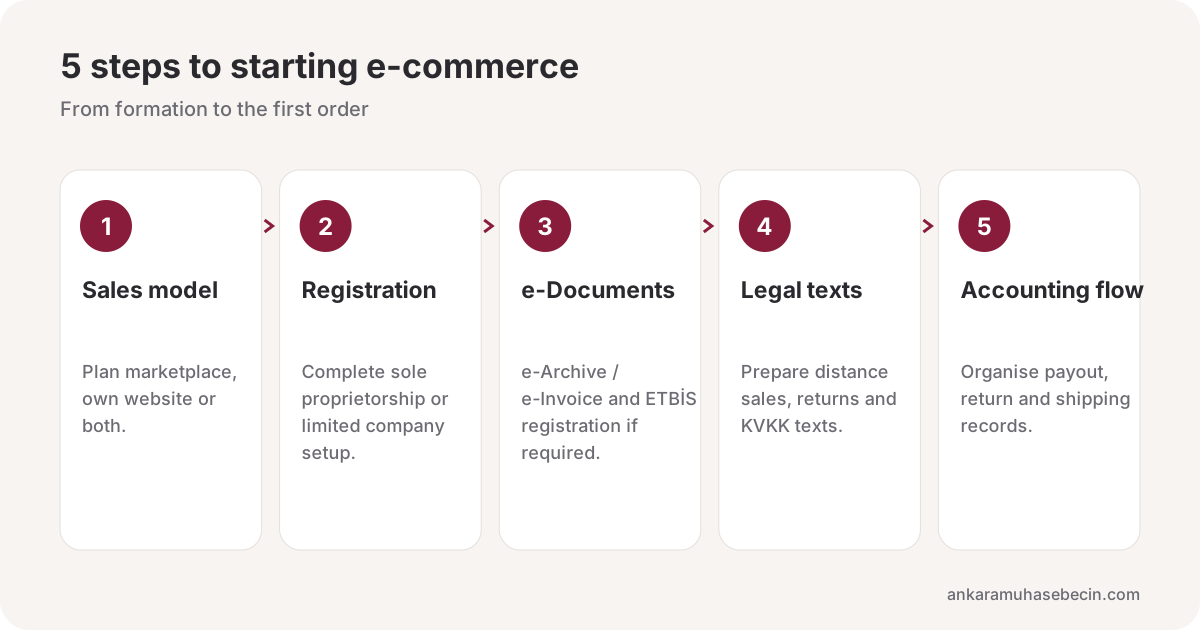
Short answer: To start an e-commerce company in Turkey, first decide on your sales model (marketplace, your own website or both) and your company type. Most start as a sole proprietorship; a limited company is preferred if you plan to grow or take on partners. After formation, set up e-Archive or e-Invoice; if you sell through your own website, complete ETBİS registration and prepare the distance sales agreement and KVKK texts. Finally, build a regular accounting flow for marketplace payouts, returns and shipping costs.
E-commerce makes it possible to start selling quickly with low initial costs. But a fast start should not mean skipping the legal and financial groundwork. In this guide, we at Ankara Muhasebeci explain the order to follow, the mandatory registrations and how to build your accounting routine.
Below you will find a comparison of sales models, a five-step start-up flow, the list of legal registrations and texts, often-forgotten budget items and short answers to common questions.
1. Choose your sales model
| Model | Advantage | Accounting focus |
|---|---|---|
| Marketplace only | Ready traffic, fast start | Commission, shipping and payout reconciliation |
| Own website | Brand control, no commission | Payment provider transfers, ETBİS, legal texts |
| Marketplace and own website | Channel diversity | Separate reconciliation and stock per channel |
| Selling abroad | Wider market | Export documents and VAT treatment |
2. Choose a company type
Most e-commerce beginners start as a sole proprietorship because of low cost and fast setup. If there are partners, rapidly rising income or corporate suppliers, a limited company may suit better. See sole proprietorship or limited company, how to set up a sole proprietorship and documents for company formation.
3. Set up e-documents
Online sellers mostly document consumer sales with e-Archive invoices. If the buyer is a registered e-Invoice user, you must issue an e-Invoice. Marketplaces also send you e-Invoices for commission and service fees. Getting invoicing right from the start prevents most reconciliation problems later. See e-Invoice vs e-Archive and our e-Transformation service.
4. Legal registrations and texts
- ETBİS registration: e-commerce service providers must register with the Ministry of Trade's Electronic Commerce Information System. Marketplace-only sellers should confirm the current rules.
- Distance sales agreement and pre-information form: the information required by law must be provided before the order.
- Right of withdrawal and returns: the consumer's withdrawal right and return process must be stated clearly.
- KVKK privacy notice: explain why customers' personal data is processed.
- Cookie policy: inform visitors about cookies used on the site.

Starting an e-commerce business in Ankara
E-commerce businesses in Ankara register with the tax office responsible for their business address. If the warehouse and office are at different addresses, the warehouse may need to be declared as a branch or workplace. Businesses that start from home often need a separate warehouse as stock grows; the address change must then be notified to the tax office and, if required, the trade registry. Plan carrier agreements, return logistics and packing at formation too: whether shipping is charged to the customer, built into the price or managed via the marketplace affects how records are kept.
5. Build the accounting flow
- Invoice every order: at the same time as it is shipped.
- Reconcile payouts regularly: match marketplace payments with sales and deduction invoices; see marketplace payout reconciliation.
- Track returns separately: on both the stock and invoice side.
- Document shipping and packaging: they add up to a significant cost.
- Keep stock records: compare purchase invoices with items sold.
Sourcing and purchase invoices
Measuring profit correctly depends on recording product cost correctly. Every purchase from a supplier needs an invoice in your business's name; goods bought without invoices cannot be recorded as cost and create unexplained stock differences. If you produce your own goods, document raw materials, packaging and labour. Small items such as boxes, labels and mailing bags add up to a real cost.
Often-forgotten budget items
- e-Archive and e-Invoice integrator fees
- Marketplace commissions and extra service fees
- Payment provider or virtual POS fees
- Shipping, packaging and return logistics
- Chamber fees, Bağ-Kur or staff costs
- Accounting fees
Reflecting these in your prices reduces the risk of high turnover with low profit.
Card payments on your own website
On your own site, card payments are usually collected through a payment provider or a bank's virtual POS, which transfers funds after deducting its fee and invoices you for it. As with marketplaces, sales invoices, provider statements and bank transactions should be matched regularly.
Selling abroad
Sales to consumers abroad follow different customs and VAT rules. Simplified procedures exist for small shipments, but documents and shipping processes must be designed correctly. If you plan to sell abroad from day one, discuss it at formation so the activity code and invoicing are set accordingly. Service exporters may find our service export tax exemption guide useful.
Foreign founders
Foreign entrepreneurs can also set up an e-commerce business in Turkey, either as a sole proprietorship with a residence permit and tax number or as a limited company with foreign shareholders. The formation documents differ slightly, as explained in our company formation guide, but the e-commerce steps are the same: e-Archive invoicing, ETBİS where required, legal texts in Turkish and a regular accounting flow. Working with an accountant who communicates in English helps you follow obligations from the start.
Common mistakes at the start
- Selling before tax registration
- Invoicing the payout amount instead of the sale amount
- Copying legal texts from templates without review
- Mixing personal and business accounts
- Leaving shipping and returns out of the records
For the general tax framework, see our tax guide for marketplace sellers.
Frequently asked questions
Do I need a company to sell online?
If you sell online regularly for profit, you are carrying on business and need tax registration. A sole proprietorship can be enough to start.
Sole proprietorship or limited company for e-commerce?
A sole proprietorship is practical for starting alone at low cost; a limited company may suit partnerships, higher expected income or a corporate structure.
Who needs ETBİS registration?
E-commerce service providers need ETBİS registration; those selling through their own website should complete it at formation.
Which invoice is used in e-commerce?
Consumer sales mostly use e-Archive invoices; if the buyer is a registered e-Invoice user, an e-Invoice must be issued.
Can I run e-commerce from home?
Yes. A home address can be the business address; it is assessed for suitability during the tax office inspection.
Do marketplaces require extra documents?
Marketplaces usually ask for a tax certificate, ID and bank details at seller registration, all easy to obtain once formation is complete.
Conclusion
Starting an e-commerce company is fast and manageable when done in order. Clarifying the sales model, choosing the right company type and building invoicing and reconciliation from day one keep the business from becoming chaotic as it grows. As orders increase, manual work quickly becomes unmanageable. Linking invoicing, stock and reconciliation from the start removes one of the biggest obstacles to growth.
At Ankara Muhasebeci, we handle formation, e-Transformation and marketplace accounting for e-commerce businesses. See our e-commerce accounting and company formation pages, or reach us via our contact page.